
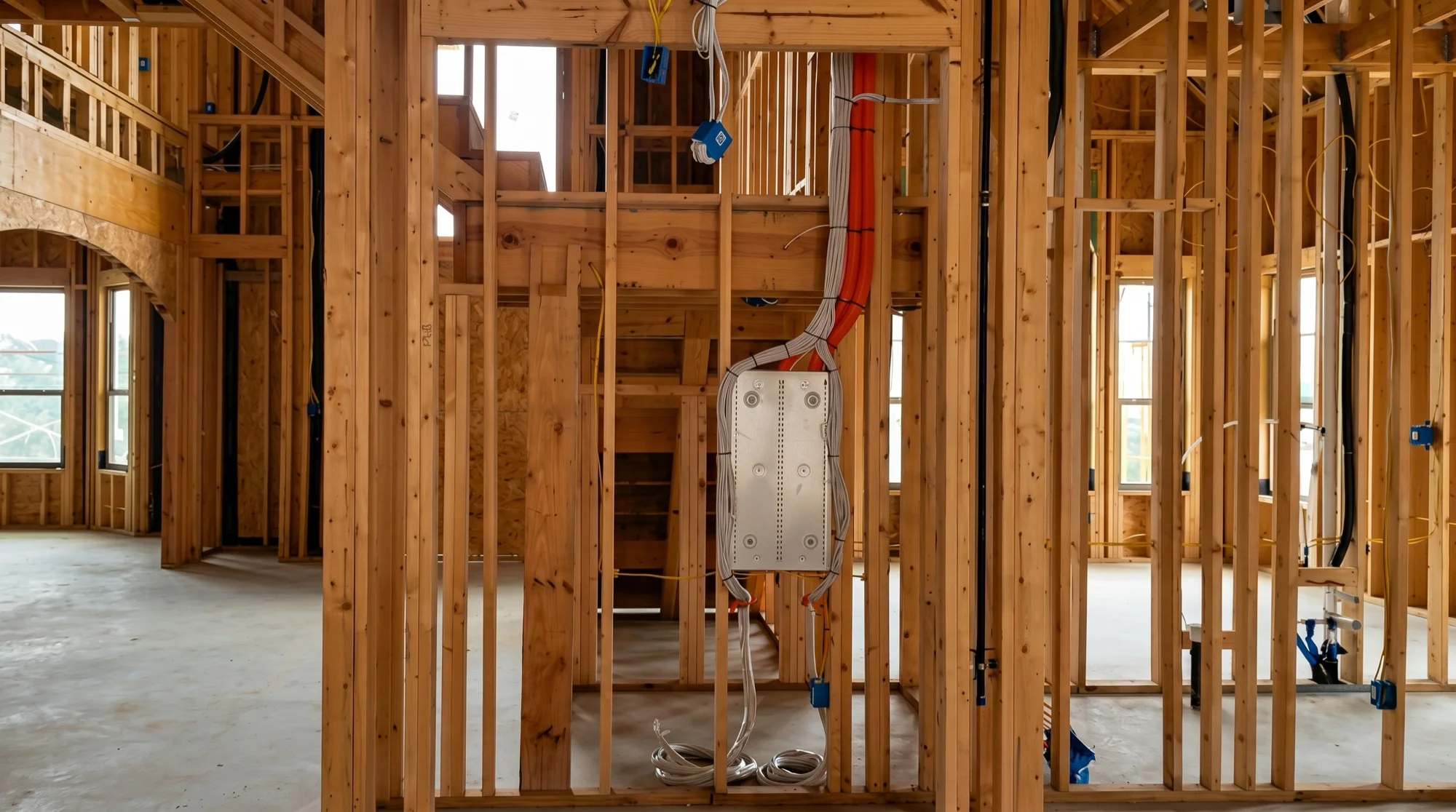
As smart home technology becomes more integrated into everyday living, homeowners are increasingly looking for seamless, future-ready solutions that enhance both convenience and resale value. One of the most overlooked, but critically important, aspects of a well-executed smart home setup is pre-wiring. Whether you are building a new home or undergoing a major renovation, investing in structured pre-wiring lays the essential groundwork for scalable, reliable, and discreet smart automation.
This post dives into why pre-wiring matters, what systems benefit most from it, and how it sets your home up for long-term success.
Why Pre-Wiring is the Foundation of a Truly Smart Home
Pre-wiring is the process of running low-voltage cables through walls, ceilings, and conduits before drywall is installed. This enables future integration of AV systems, automation components, and security infrastructure without relying solely on wireless signals or visible wiring.
While many smart devices today are wireless, a hardwired backbone provides superior performance, reliability, and flexibility. Wi-Fi can become strained as the number of connected devices grows. Pre-wiring ensures that critical systems, such as home audio, video distribution, lighting control, and security, are shielded from latency and bandwidth issues.
Key Systems That Benefit from Pre-Wiring
1. Whole-Home Audio
Distributed audio systems allow you to enjoy music in every room with centralized control. Running speaker wire to each zone during construction avoids costly drywall repairs later and guarantees better speaker placement and sound quality.
2. Home Theater and Video Distribution
HDMI, fiber optic, and coaxial cables can be routed behind walls to connect TVs, projectors, receivers, and media players. This eliminates visible cords and allows you to centralize video sources for clean, uncluttered entertainment spaces.
3. Lighting Control
Smart lighting systems like Lutron HomeWorks or RadioRA 3 often rely on centralized dimming panels. Pre-wiring lighting loads back to the control panel enables scene-based automation and removes the need for multiple wall switches.
4. Security and Surveillance
CCTV cameras, motion detectors, and contact sensors operate more reliably on wired connections. Power-over-Ethernet (PoE) cabling allows for fewer power supplies and cleaner installs for outdoor surveillance or perimeter monitoring.
5. Networking Infrastructure
Structured wiring for data drops ensures every room has access to high-speed Ethernet. This is essential for 4K streaming, home offices, and gaming, especially in larger homes where Wi-Fi coverage alone may be inconsistent.
Scalability and Future-Proofing
One of the strongest arguments for pre-wiring is future readiness. Technology evolves quickly. Pre-wiring your home with conduit and additional cable paths allows for new systems to be added later without tearing into finished walls. For example:
- Adding an EV charger in the garage
- Installing solar energy storage systems
- Upgrading to 8K video distribution
- Integrating smart window treatments or advanced voice control systems
When designed by a qualified smart home professional, your wiring plan will include extra capacity, redundant pathways, and clearly labeled terminations. That makes future upgrades less expensive and more efficient.
Aesthetic Advantages: Clean, Clutter-Free Spaces
Homeowners invest significantly in design, architecture, and finishes, so why let visible wires or clunky gear ruin the aesthetic? With pre-wiring:
- Wall-mounted TVs have no exposed HDMI or power cables
- Speakers blend seamlessly into ceilings or walls
- Network racks and AV components can be hidden in utility rooms or closets
- Lighting keypads reduce wall clutter and match interior finishes
Discreet integration is a hallmark of high-end home automation, and that starts with proper wiring infrastructure behind the scenes.
Increased Home Value and Appeal
Today’s luxury buyers expect technology-ready homes. Pre-wiring demonstrates that your home is designed for modern living and simplifies the process of adding automation later. Real estate agents and appraisers increasingly recognize the value of:
- Built-in audio systems
- Smart lighting
- Centralized AV racks
- Pre-wired security and networking
While wireless devices can be added anytime, professionally pre-wired infrastructure is a permanent, value-added investment that positions your home ahead of others in a competitive market.
Cost Considerations and ROI
The cost of pre-wiring varies based on home size, system complexity, and cable types used. However, pre-wiring during construction is significantly less expensive than retrofitting after drywall is installed.
- Running speaker wire during framing may cost $100–$300 per zone
- Retrofitting that same space later could cost 2–3x more due to labor and patchwork
When you factor in reduced install time for future systems, better performance, and increased resale value, the ROI is clear.
Common Mistakes to Avoid
Waiting too long. Wiring needs to happen before insulation and drywall go up. Engage an AV integrator early in the design process.
Underestimating needs. People often regret not running wire to outdoor spaces, garages, or bonus rooms. It is better to over-prep than to miss key zones.
Using low-quality cables. Inferior cable may degrade over time or fail to support future bandwidth demands. Stick to spec’d, professional-grade wire.
Skipping conduit. Running conduit lets you replace or upgrade cables later without cutting into walls, especially for long runs or outdoor feeds.
DIY without a plan. Pre-wiring should follow a documented design. Haphazard cable runs can create noise interference, dropouts, or future confusion.
Why You Need a Professional for Smart Home Pre-Wiring
While electricians may run basic low-voltage lines, a professional smart home integrator designs wiring infrastructure around your automation goals, not just power requirements. An expert will:
- Design a scalable wiring plan tailored to your lifestyle
- Select cable types that match your AV, lighting, and security systems
- Coordinate with your builder, architect, and designer
- Ensure clean labeling, documentation, and rack design
Professional pre-wiring ensures that your system is not just functional, but optimized for the luxury, convenience, and reliability that true home automation promises.
Conclusion: Building a Smart Home Starts with What’s Behind the Walls
Smart home success is not just about flashy apps or fancy remotes. It is about infrastructure. Pre-wiring is the invisible backbone that allows your technology to perform reliably, look clean, and grow with your needs. It protects your investment and positions your home as truly future-ready.
If you are building or remodeling, do not miss the window to wire smart. Partner with a certified AV and smart home professional who understands your vision and can create a foundation that will support it for decades. Learn more about AV Connect’s home prewiring and structured wiring services in Austin.
Frequently Asked Questions About Pre-Wiring for Smart Home Automation
What is pre-wiring in a smart home?
Pre-wiring involves installing low-voltage cabling for audio, video, networking, security, and automation systems during the construction or remodeling phase, before drywall goes up. It ensures reliable, hidden infrastructure that supports current and future smart home technologies.
Why should I pre-wire if most smart devices are wireless?
While wireless is convenient, pre-wired systems are more reliable, faster, and free from interference. Wi-Fi networks can become overburdened with dozens of connected devices, while hardwired connections ensure stable performance for bandwidth-heavy systems like video distribution and whole-home audio.
Can I retrofit wiring into an existing home?
Yes, but it is typically more expensive and invasive. Retrofitting requires cutting into drywall, fishing wires through finished walls, and repairing damage. Pre-wiring during construction is more cost-effective and aesthetically seamless.
Which smart home systems benefit most from pre-wiring?
Key systems include distributed audio, video distribution, smart lighting, security cameras, motion detectors, home networking (Ethernet), intercoms, and motorized window treatments. These systems rely on consistent connectivity and benefit from concealed cable paths.
How much does it cost to pre-wire a home for automation?
Costs vary depending on home size, number of zones, and desired systems. A basic smart home pre-wire could range from $2,000 to $10,000+, while high-end custom homes may exceed $20,000. Investing in conduit and spare wiring runs adds future flexibility without a large cost increase.
Do I need conduit if I’m already pre-wiring?
Yes. Conduit acts as a future-proofing tool, allowing you to pull new cables without damaging walls. It is especially valuable for long wire runs, high-heat areas, or locations where technology is likely to evolve, such as video formats or charging systems.
Who should handle the pre-wiring for my smart home?
Hire a professional AV integrator or smart home installation company with experience in designing and implementing structured cabling systems. Electricians may handle basic low-voltage runs, but they typically lack the strategic planning needed for advanced automation.
Is pre-wiring worth it for a smaller or mid-sized home?
Yes. Pre-wiring offers benefits regardless of home size. In smaller homes, it allows for cleaner installs, centralized control, and reliable performance, especially for key systems like security, networking, and audio zones.
What happens if I skip pre-wiring and rely only on wireless tech?
You may face performance limitations, lag, and connectivity issues, especially in larger homes or homes with thick walls. You will also be limited in your ability to expand or upgrade your system without visible wires or costly retrofits.
Does pre-wiring increase my home’s resale value?
Yes. A home with structured wiring is more attractive to tech-savvy buyers. Built-in AV, pre-wired speaker zones, and smart-ready lighting or surveillance systems enhance appeal and position your home as modern and future-ready.