
Section 1: Introduction, Why It Pays to Understand the Process
Upgrading to a smart home is an exciting leap, but it’s also a significant project that benefits from a clear understanding of what lies ahead. Whether you’re integrating lighting, audio, climate control, or full automation, the smart home installation process involves multiple phases, each essential for delivering a system that’s seamless, secure, and built to last.
This guide outlines what to expect from your smart home journey: from initial consultation through system handoff. For homeowners in Austin and beyond considering a professionally installed solution, understanding the timeline and process can help you feel more confident, ask the right questions, and ultimately get the most out of your investment.
Section 2: Phase One, Consultation and Smart Home Design
The smart home process begins with a thorough consultation and design phase. This is where your vision meets technical expertise. A professional integrator will take the time to understand your lifestyle, daily routines, and preferences, then translate those into a tailored system design.
What Happens During This Phase:
Needs Assessment: The installer asks how you use your home, which rooms you want to automate, and which systems you value most (lighting, audio, shades, security, etc.).
Infrastructure Review: They assess your home’s layout, existing wiring, and networking needs to avoid future compatibility issues.
Device Selection: Recommends specific hardware, such as control panels, voice assistants, and distributed audio systems, that fit both performance and aesthetic goals.
System Blueprint: You’ll receive a detailed design plan outlining devices, zones, integration points, and a preliminary timeline.
The more comprehensive and collaborative this stage is, the smoother the installation will be. It sets the foundation for a smart home system that feels natural, not forced, and performs reliably for years to come.
Section 3: Phase Two, Pre-Wiring, Network Setup, and Infrastructure
Once the design is finalized, the next critical step is preparing your home’s infrastructure. This often involves pre-wiring and network configuration, especially for new construction or major renovations. A solid foundation ensures your smart home system runs reliably and can scale with future upgrades.
Key Steps in This Phase:
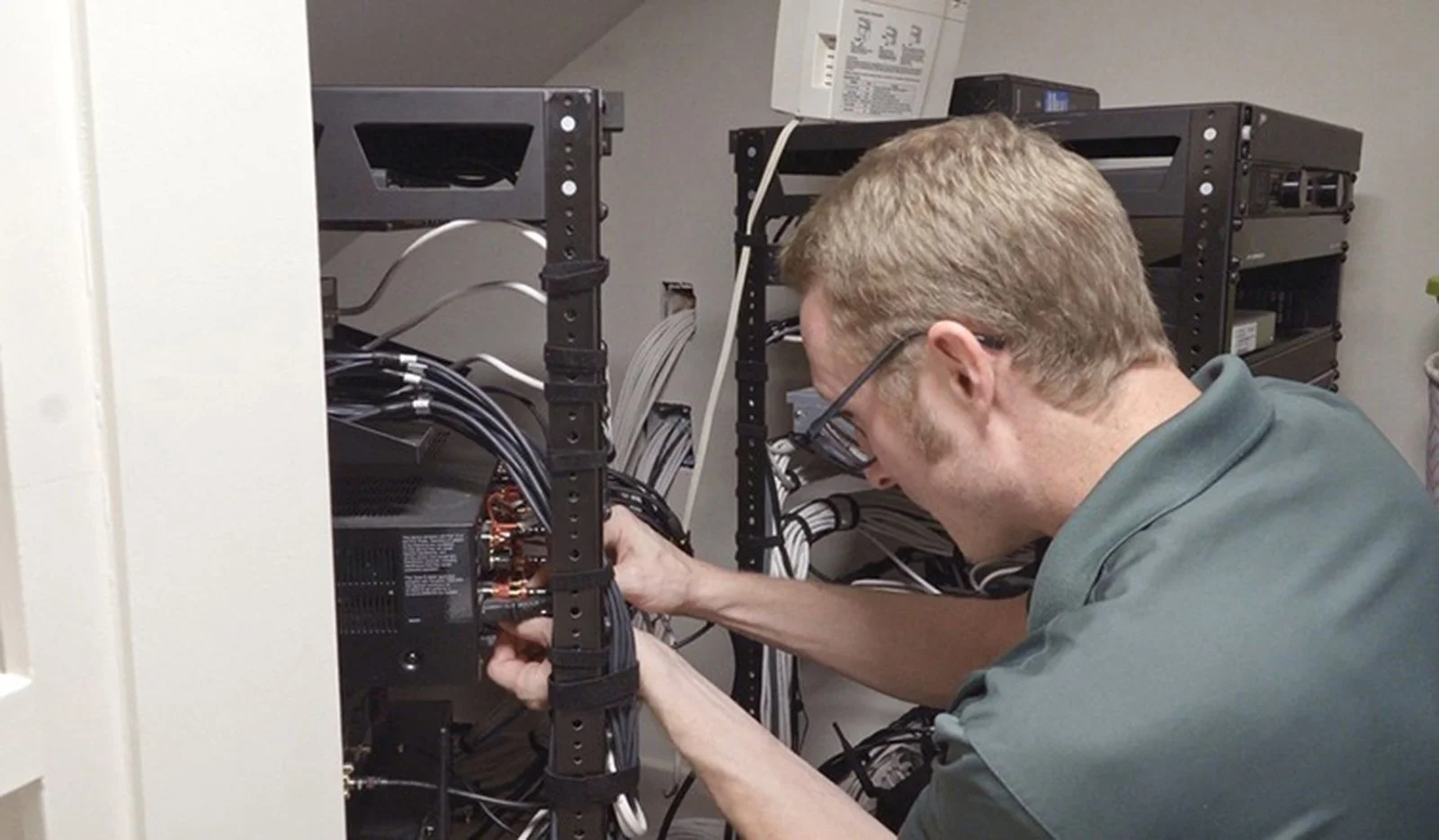
Low-Voltage Pre-Wiring: Technicians run cables for speakers, control panels, surveillance, lighting zones, and more, often behind walls or ceilings for a clean aesthetic.
Rack and Equipment Planning: Dedicated spaces are designated for housing AV equipment, ensuring heat dissipation and easy servicing.
Robust Network Setup: Since all smart devices rely on strong connectivity, this phase includes installing high-speed routers, access points, and backup systems.
Power Management and Surge Protection: Quality power management helps extend the lifespan of your equipment and protects against outages or electrical issues.
Skipping or rushing this stage can result in connectivity problems, lagging automation, or visible wiring later. That’s why professional installers treat infrastructure as the spine of a high-performance smart home system.
Section 4: Phase Three, Device Installation and System Integration
Once the wiring and network infrastructure are in place, the hands-on phase begins: installing devices and integrating them into one unified ecosystem. This stage is where your smart home vision starts becoming a reality.
What This Phase Includes:
Mounting and Placement: Technicians install smart light switches, keypads, thermostats, touchscreens, speakers, sensors, and more, ensuring optimal functionality and minimal visual disruption.
System Configuration: All devices are connected to the control system, such as Savant, Control4, or Josh.ai. Zones are configured, and scenes are created (e.g., “Movie Night,” “Entertain,” or “Away Mode”).
Software Setup: The mobile app or control interface is programmed to match your preferences. This allows for one-touch or voice-activated control over lighting, climate, media, and security systems.
Cross-Platform Syncing: Your devices are integrated to work in harmony, for instance, shades lowering automatically when the theater turns on, or lights dimming as music starts.
Because smart home systems involve both hardware and software, professional installers ensure everything works seamlessly, securely, and without conflicts.
Section 5: Phase Four, Testing, Training, and Final Walkthrough
After installation and integration, the next step is thorough testing and client education. A professionally installed smart home isn’t complete until every feature works flawlessly, and you know exactly how to use it.
This Phase Covers:
Full-System Testing: Every connected device and automation scene is tested for functionality, speed, reliability, and responsiveness.
User Training: Your integrator walks you through how to use your mobile app, voice commands, and wall-mounted interfaces. You’ll learn how to activate preset scenes, adjust settings, and even create new routines.
Adjustments and Fine-Tuning: Based on your feedback during the walkthrough, adjustments can be made to schedules, lighting levels, volume settings, and other preferences.
Troubleshooting and Redundancy Checks: They ensure there are no weak Wi-Fi zones, device conflicts, or automation bugs before closing out the project.
This hands-on training and optimization stage is vital to making the system intuitive and stress-free. The best smart homes aren’t just functional, they’re effortless to live in.
Section 6: Phase Five, Ongoing Support, Upgrades, and Future-Proofing
Even after your smart home system is fully installed, the journey doesn’t end. Ongoing support ensures that your home remains up-to-date, secure, and continues to evolve with your lifestyle and technology trends.
What Ongoing Support Includes:
Remote Monitoring & Diagnostics: Many integrators offer service plans with proactive system monitoring to detect and resolve issues before you notice them.
Firmware and Software Updates: Regular updates keep your system secure, improve compatibility, and add new features from manufacturers.
System Expansion: Whether you’re adding a new media room, outdoor living area, or a pool house, your smart home system can be scaled accordingly.
Lifestyle Adjustments: As your habits change (kids grow up, you travel more, work from home), your integrator can reprogram scenes or devices to align with new routines.
Customer Support: A dedicated support team is typically available for troubleshooting, upgrades, or adding new products, keeping your system performing at its best.
A professional installation relationship is a long-term partnership. The best integrators don’t just install and disappear; they become your go-to experts for all things smart home.
Final Thoughts: A Smarter Home Starts with Smarter Planning
Installing a whole-home smart automation system is not a DIY project, it’s a comprehensive, high-stakes process that blends engineering, aesthetics, and usability. From the initial consultation to post-installation support, each phase plays a critical role in delivering a seamless, intuitive experience tailored to your daily life.
By understanding what goes into each stage of a professional smart home installation, you’ll be better equipped to choose the right integration partner and make informed decisions about your home technology. Whether you’re building a custom home, remodeling a luxury property, or finally upgrading your outdated AV setup, working with a certified professional ensures your system is not only cutting-edge but also future-ready.
Contact AV Connect for Expert Smart Home Installation in Austin
If you’re considering home automation in Austin or the surrounding area, AV Connect is your trusted HTA-certified integration partner. From custom lighting control and voice-activated scenes to whole-home AV and motorized shades, our experienced team designs smart homes that feel effortless, look stunning, and perform flawlessly.
Visit our Smart Home Automation service page to schedule your consultation today and discover what’s possible.
FAQ: Smart Home Installation Process
What’s the average timeline for a smart home installation project?
The timeline varies based on project complexity, but most whole-home installations take between 4 to 12 weeks from consultation to final handoff. Custom new construction projects may align with the broader construction schedule.
Can I add smart home features after my initial install?
Yes. A professionally installed smart home system is designed to be scalable. You can start with core systems like lighting and expand later to include audio, shades, surveillance, and more.
Do I need to have a new home to install smart home technology?
Not at all. Many homeowners retrofit smart systems into existing homes. An integrator will help assess wiring needs and recommend wireless or hybrid solutions that work within your space.
What’s the difference between DIY and professional smart home installation?
DIY systems are limited in customization and reliability. Professional installations provide a unified control system, custom programming, better equipment, and ongoing support you can’t get from off-the-shelf products.
How much does a full smart home system cost?
Costs vary widely. A basic system might start at $10K–$25K, while fully integrated smart homes with high-end AV, lighting, and automation can range from $50K–$200K or more depending on size and complexity.
Can I integrate existing devices like Alexa or Nest with a professional system?
Yes. Many professional systems can incorporate popular consumer devices. Your integrator will ensure they work seamlessly with more advanced automation components.
Is smart home automation secure?
When professionally installed, yes. Integrators use enterprise-grade networking, VLANs, encrypted connections, and regular updates to keep your system secure and resilient to outside threats.
Do smart home systems require maintenance?
Yes, but it’s typically minimal. Most integrators offer ongoing service plans to keep your software updated, check connections, and proactively address any issues.
What’s included in smart home programming?
Programming includes configuring your system to perform routines like “Good Morning” or “Movie Night” scenes. These combine lighting, AV, shading, and more into one-touch or voice-triggered actions.
How do I choose the right smart home integrator?
Look for HTA certification, a proven portfolio, great reviews, strong client support, and expertise across categories like AV, lighting, and networking. Your integrator should act as a long-term technology partner.